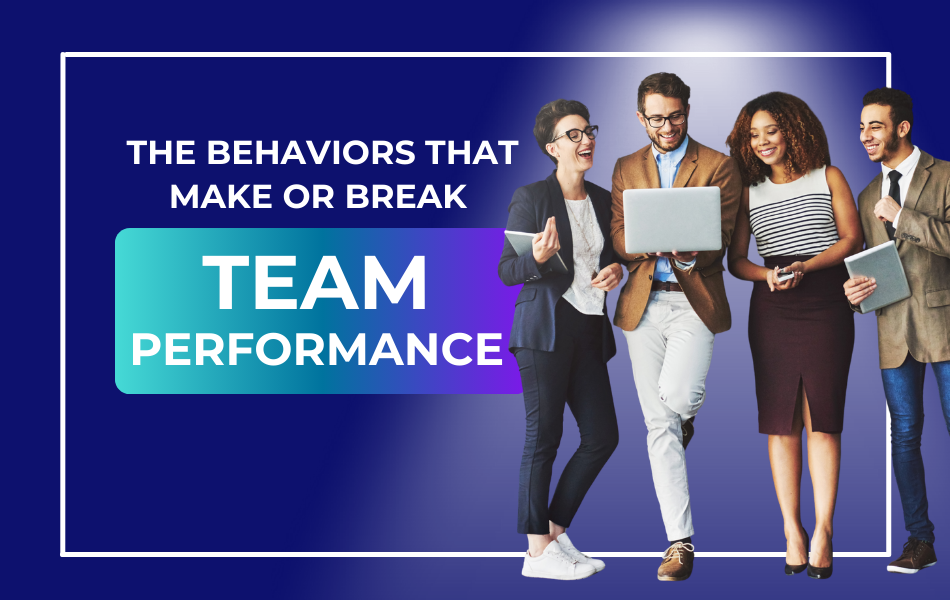
279. The Behaviors That Make or Break Team Performance
The Behaviors That Make or Break Team Performance
About this Episode
When the “real meeting” happens after the meeting…
We’ve all been there (likely on all sides of this story):
People nod along in the team meeting.
No one pushes back.
A decision gets made.
Then, moments later, Slack lights up with doubts, hallway chats surface all the real concerns, and suddenly progress slows.
This week’s episode is about those team patterns we all know are hurting us and why still so many teams get stuck in them.
Spoiler: it’s not about bad people (yes, that co-worker is not actually the problem!). It’s about predictable dysfunctions most teams naturally fall into.
Ramona walks you through the 5 core dysfunctions that get in the way of a team’s performance and shows you how to shift your team from artificial consensus and siloed execution to real trust, fierce conversations, shared accountability, and actual collective results.
If your team is smart, capable, but somehow still… not quite at its best, then this is the episode you’ve been looking for.
What we’ll talk about:
- Why “being nice” in meetings might be killing creativity and clarity
- The true cost of avoiding conflict (and how to mine it productively)
- How peer-to-peer accountability beats top-down micromanagement
- What high-performing teams actually do differently and how to get started
She also shares how the Five Behaviors® assessment and workshop help teams identify what’s holding them back and provides a structured, practical path toward higher performance.
Listen now on our Spotify, Apple Podcasts and YouTube.
Listen on



share this story
This is episode 279. We’re gonna talk about why teams get stuck and how to build high performing teams.
Here are the two questions. This podcast answers. One, how do you successfully transition into your first official leadership role? And two, how do you keep climbing that leadership ladder and continuously get promoted,
although the competition and the expectations get bigger. This show with The Manager Track podcast will provide the answers. I’m your host, Ramona Shaw.
I’m on a mission to create workplaces where work is seen as a source of contribution, connection and personal fulfillment. And this transition starts with developing a new generation of leaders who know how to lead. So everyone wins and gross. In the show, you’ll learn how to think, communicate and act as a confident and competent leader.
You know, you can be.
Welcome to The Manager Track podcast. Today we’re gonna dive deep into something that most leaders spend quite a significant amount of time on.
However, most of it is reactive problem solving and not proactive, intentional work all related to your team. Of course. And when I say sort of the proactive work in building and developing, cultivating a high performing team, I don’t mean the fun games and the icebreakers or the happy hours, that’s all good, but team leadership is very different from team bonding activities.
Now, the issues leaders get caught up in and frustrated by when it comes to this reactive approach, team building or just generally trying to build a, a better team or one of the following, we have team members who are guarded or who are unwilling to admit mistakes or weaknesses that then sort of stifles teamwork and honest communication.
You might have a team that avoids tough conversations and debates that leads to sort of this artificial consensus and low level buy-in of decisions. Or you might notice that after meetings, team members aren’t truly bought in. It’s causing confusion, second guessing, having to EC decide, and ultimately it slows down execution process.
It may also be that peers shy away from holding each other responsible and accountable for behaviors and for results. Sort of thinking, you know what? That’s the leader or the CEO’s job to do, not me as a peer. Or another scenario that we’ve come across quite often is that people focus more on their own success status, departmental goals, their own team, than on what’s good for the team or the organization as a whole.
Or to give you one more scenario that you might resonate with is that the team is full of pretty capable people, but knowledge is, you know, hoarded and not freely shared.
And then you find that there’s sort of duplicate work streams or miscommunication that’s happening, and we’re ultimately preventing the team from leveraging everyone’s skills and working in an aligned and coordinated way. If we can also see this show up in internal politics or mistrust or sort of power dynamics that ultimately set the focus away from the collective work.
So these are sort of like the tactical things that many leaders deal with day in and day out as they look at and support their team, trying to cultivate this high performing, cohesive and collaborative group of people, but zooming out, but the goal of this episode is not to go into sort of all these different patterns and trying to look at why did this happen? Where is it coming from, how to address it. I’m going to talk about sort of a higher level framework.
So we’re assuming out of it, and we’re looking at patterns that lead to these types of symptoms. So what is the underlying actual diagnosis? The underlying problem then makes people behave a certain way, which leads to this lack of cohesiveness. So as we’re zooming out and we’re looking at that higher level, let’s also quickly talk about what the cost actually is. And you can probably think about how much time and energy and emotional effort you’ve put into your team leadership, your effort to support the team, to create alignment, create con consensus, maybe to make sure everyone feels included and has the information that they need, that information does flow freely and so forth.
That is quite a lot of effort that you probably already put in. It to your team or are putting into your team for organizations at large when this doesn’t happen. And when we let these behaviors sort of go on and we tolerate it, it costs organizations millions in, you know, lost productivity, in turnover, in missed opportunities, in slow innovation or slow progress overall, when we look at research, research shows that companies with highly engaged teams and engaged teams is a result of like strong team dynamics see 23% higher profitability than the average team.
Despite this pretty significant increase in just the profitability, not even talking about sort of the wellbeing and not even talking about the personal wellbeing, just profitability. But despite this pretty significant increase, only 15% of teams actually function at high levels.
That means that 85% of teams are leaving money, opportunity, and human potential on the table. And so today we’re going to look into that because knowing how to build a strong team and cultivate strong team dynamics is as much of a leadership skill as any other, and it takes as much of intentionality and a plan and deliberate effort as any other leadership skill.
So we’ll talk through the common dysfunctions that plague teams we’ll dive into Patrick Lencioni’s five Dysfunctions Framework and I’ll introduce you to a method that’s helping teams transform from being frustrated, disjoint, or mistrusting into a high performing, collaborative, and trusted team.
So whether you are leading a team that’s stuck in meetings that go nowhere, or you’re part of a group, or the real conversations happen at the end of the meeting or after the meeting, this all is going to be incredibly useful.
So let’s first talk about some clear signs of functions. Because the more that you see how all this shows up in your day to day, the more you’re able to connect the dots and actually walk away from this episode, this conversation that hopefully, you know, I have with you and you have internally in your head with clear ideas of what to do next, what to pay attention to.
You’re being reflective, you’re asking yourself some meaningful questions about how your team operates and what your role is in all of this. So, before we actually get into the framework of the dysfunctions and the five behaviors as a solution, let’s quickly revisit those problem areas.
Because if I had to make a guess, most leaders can spot team this function from a mile away. It’s usually the problem, or the question is that they don’t know exactly what to do about it. That would lead to sort of sustainable change, not just a one-off quick fix.
So really ask yourself now as we’re gonna go through this, what sounds familiar? What are you currently seeing on your team? What have you seen in the past and what do you observe even in other teams that you work with? The first one is that meeting after the meeting syndrome.
So you know, you spend an hour in a conference room, everyone nods along. People seem engaged. Decisions are made even if hesitantly, but they’re made. And then the meeting ends and then you start to realize like the real meeting and conversations actually begin in the hallway in Slack on teams sort of behind closed doors between two people.
Suddenly you start to hear concerns. That nobody voiced in that main meeting that you were supposed to have. All the doubts that stayed buried during the conversations, all the reasons why what you just decided probably won’t work, weren’t talked about. And you wonder why, why does this, why did this not come up earlier?
So that’s the first one. The second one is just being polite and agreeing. So if your team has mastered the art of what we call surface level consensus, or actually just consensus, nobody wants to rock the boat. Nobody wants to challenge ideas. No one there, theres to disagree and actually stick with their opinion.
They may have some opposing ideas or some opposing ideas, or they may say that they don’t like the idea or have some hesitations. They may talk about it a little bit. And then when you present the counter argument, suddenly they pretend to be agreeing with you because they know that ultimately this is only gonna end in consensus.
Because if this can’t end until we’ve reached consensus, then why even bother? You know, you’re not gonna change your opinion.
So you’re just gonna nod along, play along, say that you’re agreeing. And on the outside it can look pretty collaborative and peaceful. But underneath, like inside of people and maybe behind closed doors, people are checking out mentally their creativity is dying. And likely your smartest team members are biting their tongues instead of fully contributing their best thinking.
The next one I wanna have a closer look at is this, this silo approach. And we’ve all heard the target around don’t work in silos. You know, think of the company do best, what’s for the organization. We’ve gotta think about the business holistically.
It’s all nice, we say that, but then what do the actions actually tell us? So if each department or each team member operates like their own little territory in their day-to-day interaction, it doesn’t matter what they go out and promote, if everyone’s optimizing for their little piece of the puzzle, nobody’s looking at the whole picture.
And what then happens is that projects that should take weeks stretch into months because nobody wants to step on other people’s toes or coordinate across boundaries, or there’s just no way for people to compromise. It’s this stubborn approach of silos first, even if the talk sounds different. So really watch the actions on this one.
And then we have the typical conflict avoidance. And this partially overlaps with this, you know, consensus seeking, not fully speaking up, but it’s also about the conflict that fosters and grows when we have sort of interpersonal dynamics that don’t seem to get along or don’t work well together. If there is sort of the unspoken mistrust or actually if it’s on the other end where conflict is just too intense. What we often see there as an issue is when team work teams work sort.
You have one of two extremes teams that avoid any hint of disagreement. Until small issues become major crises or then teams where conflict spirals into these personal attacks and relationship damage, that is the other problem. And so figuring out are we actually effectively leveraging conflict and opposition in order to do better?
Or are we on one of the two extremes? And then let’s talk about accountability or the passenger problem. And we all kind of know who they are. So think about this for your own team, it’s team members who’ve learned they can coast while others carry the weight.
They show up to meetings. Yes, they not at the right times. They might even sort of volunteer for certain tasks. But when it comes to the actual execution for the hard tasks, the heart problem. They’re sort of mysteriously unavailable. Their, their deliverables become mediocre. Someone else actually to step in and help out, or somehow they never quite seemed to be accountable for the results they may have tried, but then it was someone else’s fault that it didn’t get to the completion, or it wasn’t done on time.
It wasn’t done well enough because someone else didn’t deliver or someone else was late. And so these passengers on the team are being tolerated. Everyone kind of just walks or works around them, but we’re not actually addressing that. That’s turning into a problem. Now, here’s what’s particularly frustrating about all these different scenarios.
They are not caused by a lack of talent or good intentions or good smart people. In fact, I’ve seen incredibly smart, well-meaning people who are actually kind and nice people, but they get trapped in these patterns.
To paint a quick picture here, imagine a leadership team at a growing tech company. It’s a handful of VPs in a room. Brilliant people who built their careers on getting results.
They’re facing a critical decision about, let’s say, a product strategy. Everyone’s prepared, everyone read the memo, everyone’s engaged in the meeting. The CPO presents three options and asks for input. It goes around the room. VP of operations jumps in. Then let’s say the VP of engineering says, yeah, great. I can see how that will work. And then the CMO chimes in saying, sure. From a marketing perspective that aligns well.
Good decision is made. Working with option two, meeting adjourned, everyone leaves and it feels like productive the VP of product walks out thinking, great, everyone’s spot in. This was easy, but. What really is happening is that the VP of engineering actually had serious concerns about the technical feasibility of that option two, but didn’t want to be the person who throws cold water on the decision.
The CMO thought option three would be easier to market, but didn’t wanna complicate things. They thought, oh, I can work with option two as well if everyone else thinks so. The VP of sales had questions about sort of customer adoption, for example, but didn’t voice them at all ’cause it seemed to already be consensus there.
And then you know, let’s say three months later, they’re behind schedule, over budget and dealing with exactly the problems that could have surfaced in that original meeting if they had the tools and the trust to have the real conversation. So again, fictional scenario, but just to highlight, this isn’t about bad people or even bad leaders.
This is about these repeated patterns that emerge when teams don’t have the right frameworks for working together effectively. And these frameworks, by the way, are things that we’re not born with. They’re also things that most of us haven’t learned in school anywhere
we actually have to learn them on the job and they get more and more important as the work intensifies and the stakes get bigger in the work that we do. So as you move on into a leadership role or senior leadership position, this stuff matters.
And it’s costly when it’s not being addressed because most of us are not experts on human behaviors and those team patterns. That is not what we do day in and day out. It does require frameworks and very intentional conversations and routines in order to ensure that we are not falling into these traps.
It’s a bit like by default of being human, we will find ourselves in our straps. So in order not to, we have to actually put in the work. You hear me talk about sort of gym references and I’m gonna go back to one of those. If you are not working out, as you get older, you will get weaker.
So the only way to not get weaker as you age. Is to work out. And so if you don’t want your team, as the team evolves, and sort of hs that sense together.
If you’re not addressing it, if you’re not taking your team to the chi, you will find yourself weaker over time, not stronger, which is why we talked about these statistics in the beginning.
85% of teams. Or leaving potential, or in that metaphor, in or in that analogy here, strength on the table. So let’s enter Patoni if you haven’t encountered his work yet. Patrick is the founder of the Table Group and one of the most influential voices in organizational on team health. His book, the Five Dysfunctions of a Team, has sold millions of copies and has 14,000 reviews on Amazon because people all over the world see exactly how these dysfunctions that he describes show up in their own teams.
So think of it at the pyramid, at the base, you need to trust. Without trust, you can’t have co productive conflict.
And without the productive conflict, you can’t get real commitment. Without commitment, you won’t have accountability. And without accountability, you can’t achieve collective results. So let me walk you through each level. First, we’re gonna start with this function. Number one, the absence of trust. This is the foundation that everything else is built on, and it’s not the kind of trust you might think Lencioni isn’t talking about I trust you’ll meet your deadlines, or I trust you’re competent at your job. He is talking about vulnerability based trust, which is the willingness to be human in front of your teammates. So here’s what this would look like.
Can a team member admit mistakes without the fear of retribution? Can they ask for help without looking weak? Can they acknowledge their limitations in areas where they need to grow? And then most teams, the answer is no. People hide their weaknesses, cover their mistakes, and try to protect an image of having everything on the control.
Now, the problem is that when everyone’s pretending to be, you know, perfect in that sense, nobody’s actually bringing their real challenges to the table. And that means the team can’t actually solve problems together.
So I was working with a marketing team recently where the director had been struggling with a campaign strategy for weeks. And instead of bringing the challenge to the team, they kept working on it in isolation, missing deadlines, and creating bottlenecks. Why? Because admitting that they needed help felt to them, like admitting incompetence.
But of course, we all see the irony in this. When they finally then brought the challenge to the team, they solved it in one brainstorming session, because the intellectual, because the collective intelligence of that group was always there. That leader just needed to trust to access it.
And sort of the reputation of incompetence is probably more so that they tried to solve it on their own without coming to the rest of the team to ask for help. And now I’m starting to worry about their competence and whether or not I can trust them, not because they couldn’t figure out the problem in itself.
The second one is the fear of conflict. So when teams don’t have this vulnerability based trust, they can’t engage in productive conflict. And I wanna be really clear, when Lencioni talks about conflict, he’s not talking about personality clashes or personal attacks. He is talking about this passionate on the Philips debate about ideas, strategies, and decisions this is the good type of conflict, the thing that we need to actually do. So think about the best conversations you’ve ever had. The ones where you left feeling energized and clear. And I bet these types of conversations involve some level of.
Intellectual tension, right? People bringing different perspectives, challenging assumptions, pushing back on ideas, not to be difficult, but to make them better. But in most teams, that kind of conflict feels dangerous. ’cause we worry about, you know, hurting someone else, stepping on someone’s toes, fearing some kind of retaliation or just bluntly looking stupid or looking bad in front of other people if we are wrong.
So instead of mining for the best ideas, the team then settles for sort of safe ones. And instead of stress testing decisions, they go with whatever kind of creates the least friction, right?
But maybe there’s a little bit of friction, but then we drop it and go with whatever seems. To be sort of that consensus
So the result blames decisions that nobody’s really excited about, missed opportunities, and that lacking feeling that the team just isn’t bringing their best thinking to the table. ’cause you probably see oh, one-on-one.
They’re really good, really smart. The moment we get into team meeting, it’s all a bit muffled and subdued. So these are the first two. We have trust and then conflict, and then we move on to that third dysfunction, which is a lack of commitment.
And here’s where things get really interesting. Most people think commitment means consensus that everyone has to agree before we can move forward. But Lencioni really argues the opposite. True commitment comes from clarity and the buy-in. Not agreement, clarity and buy-in. So think about it. Have you ever been part of a decision where you didn’t get your first choice but you walked away committed to making it work anyway?
I can think of dozens where I disagreed with it. I wanted to do something else, but I was clear on why we’re choosing this other thing. And I did it. I worked with that. I said, I disagree, but this is a decision we’re gonna make this work. It was clear and we were aligned and bought in that.
And that typically happens when the process is clear, when people feel their voices were heard. And even though the team went into a different direction, everyone understands the reasoning and feels bought into the success of the decision. Now, contrast that with decisions that are made through this artificial consensus where the team kind of keeps talking until everyone’s sort of nominally agrees, but no one’s really excited.
And the decision now is so wbb down that it’s unlikely to create the impact that you need. Or people are just not clear of what needs to happen. We agree, decision made, and then we walk out, we, we don’t know who’s gonna do what. Right? So without trust and healthy conflict, teams can get to this kind of clarity.
Decisions then feel sort of arbitrary or maybe political. People leave the meetings again, unclear about what has actually been decided.
And because they weren’t really bought in, they’re not committed to execution. You can see how that starts to become a problem. So then moving on to dysfunction four, which is the avoidance of accountability. When people aren’t truly committed to decisions and team goals, they can’t hold each other accountable.
And here’s the key insight. The best accountability isn’t top down from a manager. It is peer to peer among team members. Think about high performing sports teams. The best ones don’t rely on the coach to call out every mistake or missed assignments.
Teammates hold each other accountable because they’re all committed to the same outcome. I remember this moment for a short term in high school.
I played soccer and I was in the midst of a soccer game, and I had a moment where I thought like, oh my gosh, everyone’s yelling at each other. You get bullied and pushed from the competitive team from the other team, they’re trying to distract you with their verbal comments or pushes, and then you have the entire team who tells you when you’re too slow, you missed it, you did the wrong thing, but that is what makes that team strong.
And I don’t mean the other team trying to distract you, but your team constantly being on it as observing everyone’s move and constantly being in communication with each other. What’s working, what isn’t, not worrying about how you might feel in that moment or worry that you take it personal and, and are not gonna like them anymore or whatever that may be.
No, it’s very tactical and practical and all about the outcome. Now, in this functional teams accountability feels a lot more sort of personal and punitive. No one wants to be that bad guy who calls out a teammate’s poor performance. So then we see standard slip mediocrity, becomes acceptable, and your strongest performers get frustrated watching others coast.
Those A players don’t wanna play with B or C players, right? I’ve seen this kill team morale faster than anything else. When accountability is missing your best, people start to wonder why they’re working so hard when others can get away with doing less. And again, often people think accountability has to come sort of top down.
It’s the ceo, they’re the team leader’s role for to create accountability, but that’s not the case. High performing teams have the peer to peer accountability figured out. In most cases though, as I’ve seen, it’s really hard for team to get there on their own without a framework that addresses it and gives them the mandate to call each other out.
That gives them the language to do so and tells them that that is what we’re expecting. And it’s made really clear and very explicit. Okay, so that is number four. Number five now is the inattention to results. And actually I wanna clarify this because sometimes people say, okay, we might not be doing so well with the other four, but we still get results.
But here’s the thing, when teams can’t trust each other, engage in productive conflict, cannot commit to decisions and don’t hold each other accountable, they lose focus on the collective results. So people start to optimize for individual goals. Could be team goals, personal goals, departmental metrics.
The sales team cares about their numbers, marketing cares about their campaigns. Engineering cares about their technical excellence and lines of code that they deploy. But nobody really focuses on the overall success of the organization or the department or the team.
And this is where you see most talented individuals somehow producing mediocre team results, right? ’cause everyone’s pulling in slightly different directions and the combined output is less than the sum of its parts. So when you see individuals perform well, but collectively it we’re not creating results or not the results that we’re looking for, then that is one of the symptoms that we see when the rest of the pyramid is cracking.
Now here’s what’s brilliant about this framework. , It shows you exactly where to start and you can’t skip steps. You can’t fix accountability without first building trust and establishing healthy conflict norms.
You can’t get commitment without the foundation of trust and conflict. But then when teams do get this right, when they align and solidify this pyramid, that is when this magic starts to happen. This is when people say, like, my team sells and this is the best team I’ve ever worked on, and the results the collective results will show.
So now let’s talk about what high performing teams actually do differently
When teams move from this function to high performance. People are almost like refreshingly human right. They admit when they don’t know something, they ask for help without embarrassment. They acknowledge their mistakes quickly and focus on learning rather than blame.
For example, I worked with a leadership team where the CEO started to regularly begin meetings by sharing their biggest challenges or mistakes from the previous week. It’s super simple, but it created permission for everyone else to be equally transparent.
So suddenly the problems got surfaced and solved faster ’cause nobody was wasting energy on pretending to be perfect or demonstrating this ideal that wasn’t actually the truth behind the curtains. Next instead of polite agreement or personal attacks. On the other side of the spectrum here, high performing teams engage in this type of fierce conversation.
They challenge each other’s ideas, not to tear them down, but to make them better. They ask tough questions because they care about getting to the right answer, not because they want to score points. So these teams that understand that the best ideas come from collision when different perspectives clash and something new emerges, they’re not afraid of tension.
They mine it for insights. Now let’s look at commitment. So when high performing teams make decisions, everyone leaves being crystal clear about what was decided, why and what their role is an execution. Again, they may not have gotten the first choice, right?
They may want something different, but they understand their reasoning and they’re committed to make it work. So these teams have mastered the art to disagree and commit. By the way, in many companies, it’s a very explicit principle that they live by, we disagree and commit. They can have the passionate debates during decision making processes. They’re they’re in the court. They’re debating during the decision making process.
But then once a decision is made, they present a united front and execute with full energy. Okay, now onto accountability, instead of waiting for the manager to address performance issues, right, or to raise the bar. Team members hold each other accountable, but they do it in a way that’s supportive and focused on the collective success.
Hey, I noticed you missed the deadline on the Johnson Pros. Hey, I noticed you missed the deadline on the bookstore project. What support do you need to get back on track? Not blame, not punishment, just direct conversation focused on getting the team back to high performance.
And lastly, let’s talk about results. So these high performing teams obsess over team metrics, not individual ones. They celebrate the collective wins. They make personal sacrifices for team success.
Individual achievement is still valued, but not at the expense of the team. So think about the best team you’ve ever been part of. It could be at work in sports, in a volunteer organization. I bet it felt different from other groups, right? From these are average teams you’ve been on, there’s likely energy in the room.
People looked forward to meetings, decisions got made and executed quickly. Problems got solved collectively, instead of sort of waiting to or avoiding it or then later escalating it.
But now here’s the million dollar question. How do you actually get there? How do you move from recognizing this function to building high performance? And that is exactly where the five behaviors program comes in.
Because ultimately even if we wished it wasn’t, so we can’t talk our way to high performance.
We can’t dictate it to the team. We can’t just prescribe it. We need practical tools. Measurable insights and a very structured experience that helps teams practice new behaviors until they become natural. We need to take the team to the gym in order to have the strength in the day-to-day actions, when we have to walk up and down the stairs, when we put furniture together, when we fix something around the house, that is why we go to the gym and we maintain strength as we age so that the day to day we can handle and we’re actually gonna be good at it.
And so , the five behaviors framework is taking the team to the gym and the way to introduce the framework to your team is through one, an assessment and then to. And one, an assessment, and then two, a workshop. So the assessment it’s to get a clear baseline. In essence, so that the assessment specifically designed for the five behaviors which by the way, was developed by Patrick Lencioni and is now administered and executed by Wiley, who’s also one of the biggest providers of the disc.
Assessment it’s not just a team dynamic survey or an engagement survey. It combines two powerful elements. First, it gives you a clear picture of where your team currently stands on each of the five behaviors. Are you struggling on trust, but are you strong on trust but struggling with accountability? Are you great at conflict but poor at commitment?
The the assessment shows you exactly which dysfunctions are most present. And which behaviors need the most attentions attention. And by the way, when you see things black on white because of the teams of collective responses, it is a really powerful catalyst for conversations and to address the thing we all feel, but don’t talk about.
And when it’s black on white, we can’t deny it. We have to actually look at it and deal with it. And that’s why these types of assessments and evaluations on team health are such powerful catalysts. Then two it also helps team members understand their individual styles and it weaves in the disc styles to show how their behavioral patterns contribute to team dynamics.
Because here’s what we’ve learned, team dysfunction often comes from style differences that people don’t understand or know how to navigate this is part of what I said in the beginning. This is just us being human When we’re in the room with others, that is what naturally happens.
So when someone with a high D style, and if you’re not familiar with this, this means someone who’s very direct and results focused works with someone with a high S style or someone who prefers this kind of steadiness and is often focused on harmony, they can easily misinterpret each other’s motivations.
Right. The, the d the direct style might then see the, the asset that steady style as indecisive or conflict avoidant. And on the other side, the person with the steady behavioral traits might see the person with the direct style as aggressive or even insensitive.
But when they start to understand these are just different approaches to achieving the same goal, they can leverage the differences instead of being frustrated by them. And by the way, when we start to see that intentions are actually good and we’re just misinterpreting their behaviors, when we can uncover that, it starts to build a deeper connection.
And that seeds so much trust in the relationship. So that makes up the assessment. And then there’s the second component, which is the workshop experience. Because ultimately it’s all about the practice and all about doing the work at the gym.
This in this time in the workshop is where the real transformation happens. It’s, by the way, not at all. It’s the opposite of a sit and listen training session. It’s a highly interactive experience.
Designed for intact team meaning existing teams who want to embed new behaviors into their regular daily weekly routines, teams, work through trust building exercises. And not just team bonding act activities that helped them understand each other’s working styles and again, motivations.
Then they practice conflict mining. So learning how to surface and work through disagreements productively. They develop commitment processes that ensure clarity and buy-in. They create accountability systems that feel supportive rather than punitive.
But then what really makes this program different from other development programs is that you are practicing new behaviors with your actual teammates on your real. Work, work and design specifically with the assessment.
You are sort of baseline check-in in mind.
The reason why we at Arco Vva are now a certified provider of the five behaviors assessment and workshops is because the data proves how strong the results are. 89% of participants we import improve improved effectiveness.
It’s almost nine out of 10. People say their team actually functions better after going through the program. So clear communication, better decision making, more efficient execution. There’s so much that goes along with that less emotional load that we carry.
Less interpersonal stress. That we feel stronger wellbeing, but also on the dollar amount. Higher productivity, higher performance, stronger innovation, faster execution. All that adds up. The ROI on a program like this is undisputed.
But the number that really matters to leaders is this. Teams that complete the five behaviors program see measurable improvements in business results, revenue, customer satisfaction, employee engagement, the things that directly impact your bottom.
But then of course with everything that we do, and hopefully whether you work with us at ar cova or have your own sort of processes with learning or leadership development, anything that we want to sustain, we have to keep going.
One of the men events won’t do it. So in the five behaviors program, teams also get ongoing tools and processes to reinforce the behaviors they learned, regular checkings, progress tracking, refresher sessions, all of that to ensure that habits stick.
Because let’s remind ourselves, team transformation doesn’t happen in a day. It happens through the consistent practice of better behaviors until they become the new normal.
So with the right framework, practical tools and deliberate efforts, teams can generally shift from the politics and silos to trust and results from meetings that drain energy to sessions that generate momentum from individuals working in parallel to a collective that’s truly greater than the sum of its parts. So let me bring all of this together. We’ve talked about the frustrating science of team dysfunction that you probably recognize. From the meetings, after the meetings, the polite agreement that lead to nowhere, the silos that slow everything down.
Then we’ve walked through Patrick Lencioni’s five Dysfunctions Framework, the absence of trust that makes people hide their humanity, their fear of conflict that keeps teams from a a from accessing
Their best thinking, the lack of commitment that comes from unclear decisions, the avoidance of accountability that lets standards slip and the
inattention to results that then sort of fragments team focus. So we’ve painted a picture of what high performing teams look like. The vulnerability and candor. Again, the passionate about the passionate but constructive conflict, the clarity and buy-in, the peer-to-peer accountability and the somewhat obsession with collective results.
We’ve also introduced the five behaviors, assessment and workshop as the practical bridge from this function to high performance
Now of course, because I know how strong the ROI is, how much your team would benefit from this.
I would love for you to read the book or to reach out to us to take the assessment, to have a workshop for your team. That would all be great, and we would love to support you with this, but in this episode alone here, I really encourage you to think about the dysfunctions that show up most clearly in your day-to-day experience, maybe with your peers or with the team that you lead, where do you see the biggest opportunity for improvement?
Is it trust? Are people hiding mistakes? Playing it safe Instead of being sort of real and bringing challenges to the table? Is it conflict? Are people too polite versus having real conversations? Is it commitment? Right? Are decisions made that but it’s not moving forward?
Is it accountability or is it the results, right? Are individual agendas sort of trumping the collective success whatever you identified,
that is a starting point. So look at the pyramid and start to think through. What might be the root cause of the types of behaviors that you see, and then what is even one thing that you could do to at least get the conversation going? Maybe it is to connect with us and look into what an assessment will look like. Or maybe it’s just sharing this episode with the rest of your team, or it is to choose a topic and bring that up in your next team meeting.
Or have one-on-one conversations to do a bit of a check-in to ask some really useful questions about these different behaviors and assess what other people see and how they would evaluate the team health at this point.
If you wanna learn more about the five Behaviors program, we’ll put a link in the show notes to our program overview where you can find more information about what bringing this framework to your team would look like, regardless of what you choose to do next. I hope this episode specifically what’s motivating you to think about your team leadership?
Really think about how does the whole construct operate? How do people engage with each other. And then again, what is one thing that you can do to take your team to the gym?
Or at least, you know, in that analogy, do a five minute home workout if the gym isn’t available. Be back with another episode, The Manage Track podcast. Next week.
If you enjoy this episode, then check out two other awesome resources to help you become a leader. People love to work with. This includes a free master class on how to successfully lead as a new manager. Check it at archova.org/masterclass.
The second resource is my best-selling book, the confident and competent new manager, how to quickly rise to success in your first leadership role. Check it out at archova/books or head on over to Amazon and grab your copy there.
You can find all those links. In the show notes down below.
REFLECTION & DISCUSSION QUESTIONS
- Where does my team currently struggle the most with trust, conflict, commitment, accountability, or results?
- When was the last time I saw my team settle for “surface-level consensus” instead of having real, productive debates?
- What is one small step I can take this week to strengthen our team’s foundation whether it’s creating more openness, encouraging honest conflict, or clarifying commitments?
RESOURCES MENTIONED
- Learn more about our Five Behaviors Program: HERE
- Grab the free New Manager Toolkit mentioned in the episode: archova.org/freetoolkits
- Executive Presence Intensive: archova.org/executive-presence-program
- Learn how to turn your 1-on-1 meetings from time wasters, awkward moments, status updates, or non-existent into your most important and valuable meeting with your directs all week. Learn more at: https://archova.org/1on1-course
- Schedule a Leadership Strategy Call with Ramona HERE.
- Grab your copy of Ramona’s best-selling book ‘The Confident & Competent New Manager: How to Rapidly Rise to Success in Your First Leadership Role’: amzn.to/3TuOdcP
OTHER EPISODES YOU MIGHT LIKE
- Episode 223 – Chess-Inspired Strategies for Better Strategic Thinking – With Shawn Stewart
- Episode 127 – How to Lead a Thriving Team with Kirstin Moorefield
WHAT’S NEXT?
Learn more about our leadership development programs, coaching and workshops at https://www.archova.org/
Grab your copy of Ramona’s best-selling book ‘The Confident & Competent New Manager: How to Rapidly Rise to Success in Your First Leadership Role’: https://amzn.to/3TuOdcP
Want to better understand your leadership style and patterns? Take our free quiz to discover your Manager Archetype and learn how to play to your strengths and uncover your blind spots: https://archova.org/quiz
Are you in your first manager role and don’t want to mess it up? Watch our FREE Masterclass and discover the 4 shifts to become a leader people love to work for: https://www.archova.org/masterclass
Love the podcast and haven’t left a review yet? All you have to do is go to https://www.ramonashaw.com/itunes and to our Spotify Page, and give your honest review. Thanks for your support of this show!
If this episode inspired you in some way, take a screenshot of you listening on your device and post it to your Instagram Stories, and tag me https://www.instagram.com/ramona.shaw.leadership or DM me on LinkedIn at https://www.linkedin.com/in/ramona-shaw